Environment
Planting Roots — Our Tree Transplantation Initiative in Nepal
For every 100 bags sold, we plant 10 native trees in deforested Himalayan hillsides. Here's why it matters more than you think.
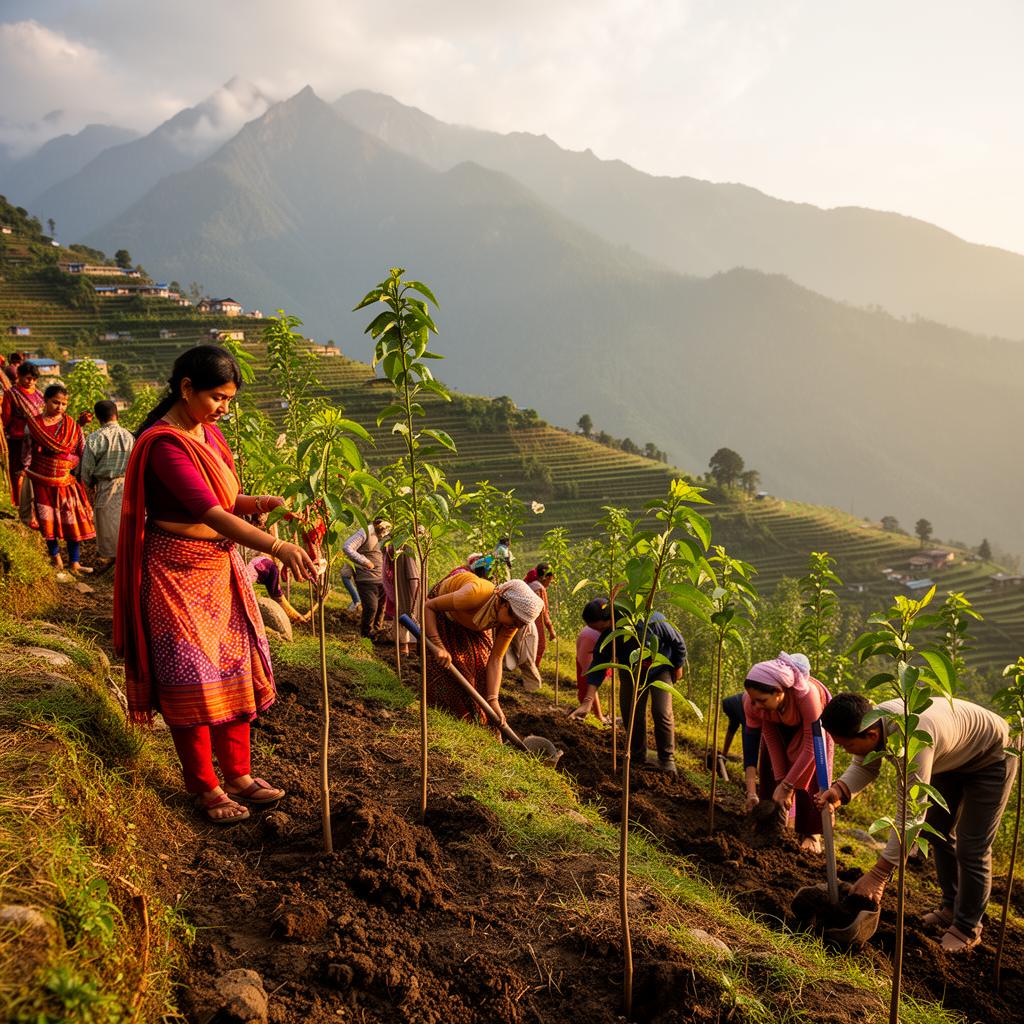
Nepal loses approximately 1.7% of its forest cover every year. In the mid-hills where our tea grows, deforestation threatens not just biodiversity — it threatens the very soil that makes Himalayan tea exceptional.
In 2024, we partnered with Community Forest User Groups (CFUGs) in Ilam and Panchthar to begin transplanting native species — Chilaune, Uttis, and Rhododendron — onto degraded slopes adjacent to tea gardens.
Why transplantation, not just planting? Because seedlings grown in local nurseries and carefully moved to prepared sites have survival rates above 85%, compared to 40-50% for direct seeding. Every tree matters too much to leave to chance.
To date, we've transplanted over 4,200 trees across 12 hectares. The eldest are now three years old, their roots binding soil that once washed away with every monsoon rain.
Trees don't just prevent erosion. They create micro-shade that protects tea plants from scorching sun. They attract pollinators. They store carbon. And they provide firewood and fodder that reduce pressure on remaining forests.
Our goal is 25,000 trees by 2030. Not because it's a round number, but because that's roughly what it takes to restore the canopy cover our partner communities lost over the past two decades.
When you brew a cup of our tea, you're not just tasting altitude and care. You're tasting a landscape that's being rebuilt, one sapling at a time.
Reported on the terraces of eastern Nepal. Every batch we sell is traceable to a named grower and harvest date, and dispatched within 24 hours from Bristol.