Farmer Story
Kamala's Hands — A Life Measured in Leaves
For forty-three years, Kamala Devi Tamang has walked the same terraced hillside in Ilam. This is her story — told in her own words.
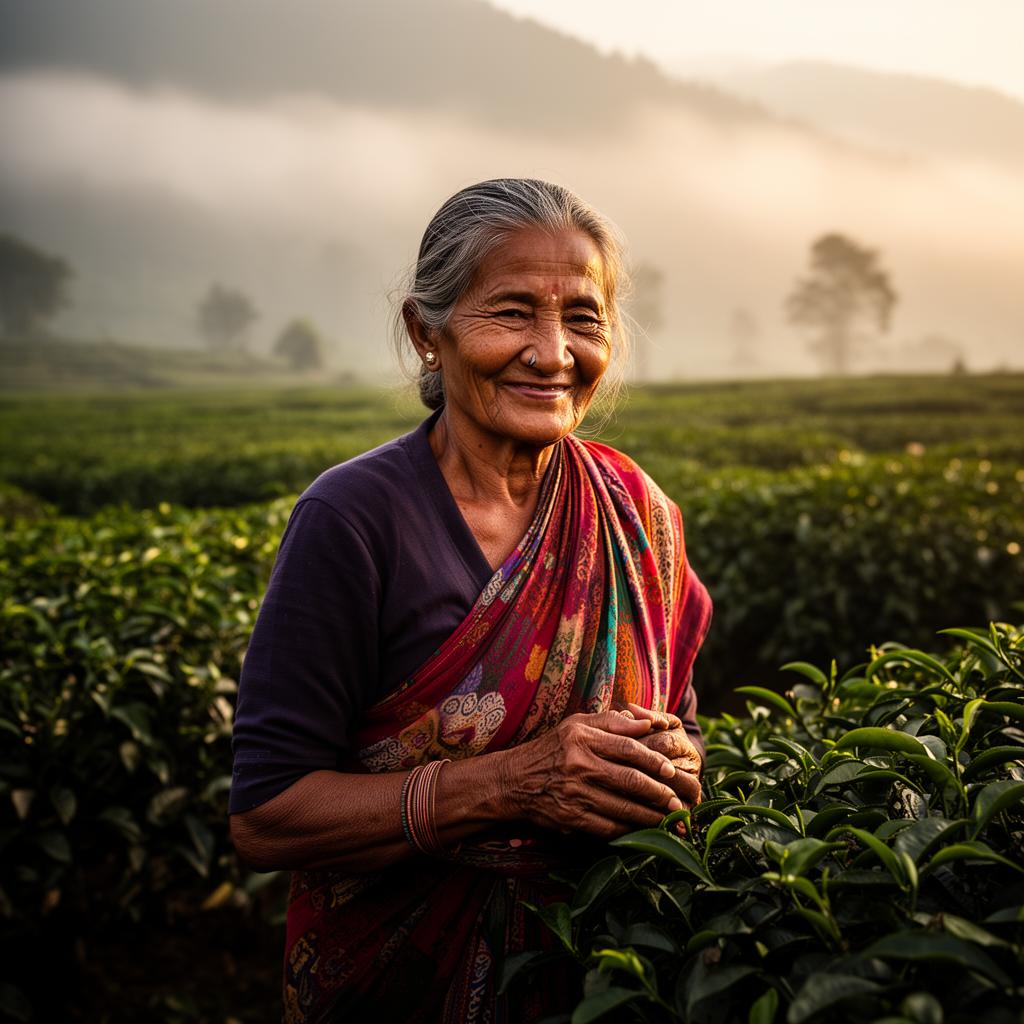
The morning she showed us her hands, nobody spoke for a long time.
Kamala Devi Tamang is sixty-seven years old. She has been picking tea since she was twenty-four — the year her husband died in a landslide, leaving her with three children, half an acre of hillside, and no income.
“I didn't choose tea,” she told us, sitting on the porch of her small stone house in Ilam, the Himalayan foothills stretching green and infinite behind her. “Tea chose me. It was the only thing that would grow fast enough to feed my children.”
Every leaf I pick carries a prayer. For my children. For the rain. For one more season.
The Early Years
In the beginning, she worked other people's fields. The pay was measured in kilograms — roughly 15 rupees per kilo of green leaf, barely enough for rice and lentils. Her eldest daughter, Sita, would carry the baby on her back while Kamala picked from sunrise until her fingers cramped.
“There were days I wanted to stop. My back ached so much I couldn't stand straight. But when you have children looking at you with hungry eyes, your body finds a way.”
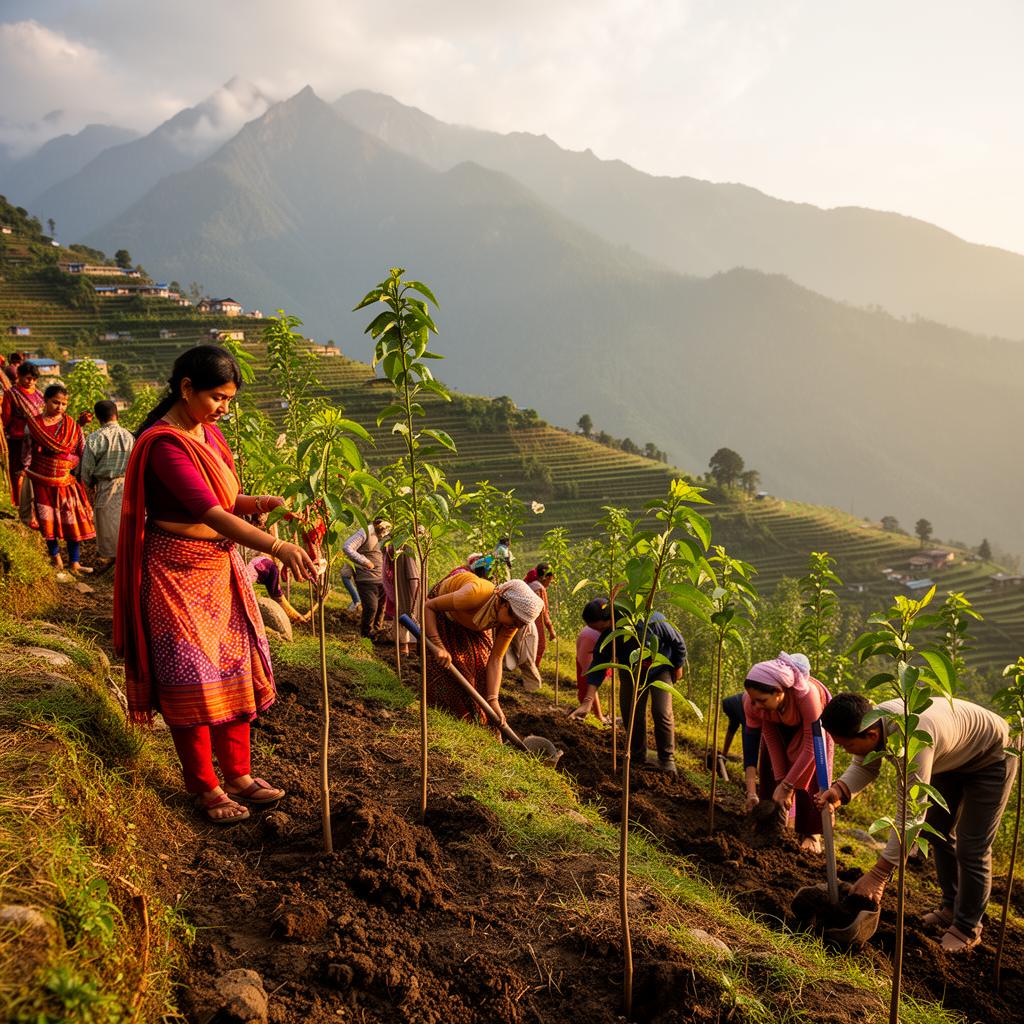
It took her eleven years to save enough to plant her own bushes. She bought 200 saplings from a neighbour — a mix of Takda and Chiniya varieties — and planted them on the steep slope behind her house, terracing the earth by hand.
“I carried every stone myself. People said I was foolish. A woman alone, farming a cliff. But that cliff is why my tea tastes the way it does. The altitude. The struggle. It all goes into the leaf.”
The Turning Point
For decades, Kamala sold her leaves to middlemen who paid commodity rates and blended her tea with lower-altitude harvests. She never knew where her tea ended up or what people paid for it.
When we first visited her garden in 2023, we were struck by something unusual: the bushes were immaculate. Each one pruned with an almost artistic precision. The soil between rows was covered in a natural mulch of decomposed leaves. No chemical fertilisers. No pesticides.
“Why would I poison the thing that feeds me?” she said, genuinely confused by the question.
We bought her entire first flush that year — 47 kilograms of silver-tipped green tea with a sweetness that reminded us of fresh sugarcane and wildflowers. We paid her three times what the broker offered.
She cried. Not from the money, she told us later, but because someone had finally tasted what she'd spent forty years trying to grow.
My mother used to say: the mountain remembers every hand that touches it. I want it to remember mine as gentle.
Today
Kamala now manages just over one acre. Her daughter Sita works alongside her. Her youngest son, Bikash, is studying agriculture in Kathmandu — the first person in their family to attend university.
“Bikash says he'll come back and make our farm ‘scientific’,” she laughed. “I tell him — the science is already in the soil. He just needs to listen.”
Each season, she produces around 120 kilograms of finished tea across two flushes. It's a tiny amount by industry standards. But cup for cup, it is among the most extraordinary tea we have ever tasted.
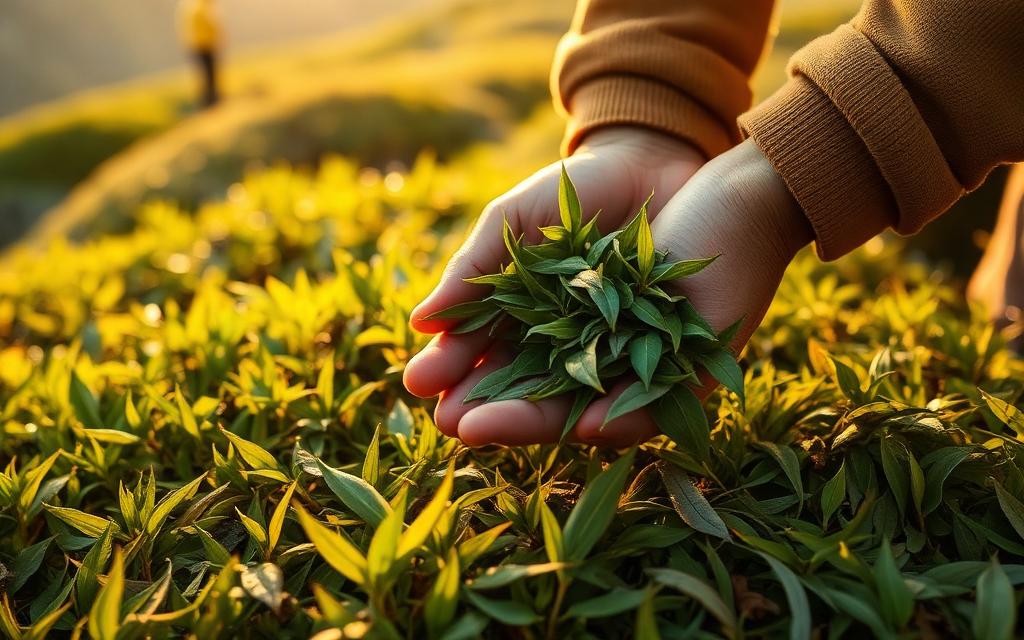
When you buy our Ilam First Flush Green Tea, you are quite literally drinking the work of Kamala's hands — hands that have known grief and rain and exhaustion, but have never stopped reaching for the next leaf.
We asked Kamala what she hopes people feel when they drink her tea.
She thought for a long time. Then she said:
“I hope they feel the mountain. The cold morning. The quiet. I hope, for just a moment, they are here with me.”
Reported on the terraces of eastern Nepal. Every batch we sell is traceable to a named grower and harvest date, and dispatched within 24 hours from Bristol.
Shop Kamala's tea